The Role of BIM and Digital Technologies in the Mumbai–Pune Expressway Missing Link Project
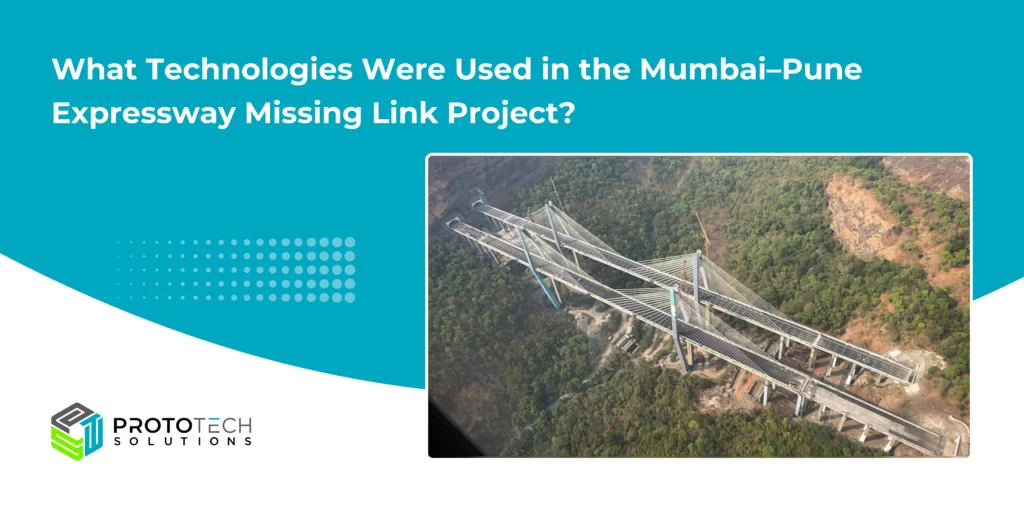
India’s infrastructure sector has entered a transformative era, where highways are no longer just transportation corridors but symbols of technological advancement, precision engineering, and national ambition. One of the most remarkable examples of this evolution is the Mumbai–Pune Expressway Missing Link Project, which is one of India’s most ambitious highway infrastructure developments, showcasing advanced tunneling, bridge engineering, and modern construction technologies.
Who Developed the Project?
Ref: NDTV YouTube Video
The Mumbai–Pune Expressway Missing Link Project was developed by the Maharashtra State Road Development Corporation Ltd (MSRDC), the government agency responsible for major road and expressway infrastructure projects across Maharashtra.
The project involved collaboration between multiple engineering consultants, tunnel specialists, bridge designers, and infrastructure contractors, reflecting India’s ability to execute globally competitive transportation projects using advanced engineering and digital construction technologies.
Project Highlights
- The project was inaugurated on May 1, 2026, marking a major milestone in India’s expressway infrastructure development.
- Developed at an estimated cost of ₹6,695 crore, the project demonstrates India’s growing expertise in large-scale transportation engineering.
- The new alignment reduces the distance between Mumbai and Pune by approximately 6 kilometers.
- Travel time between the two cities is expected to be reduced by nearly 20–30 minutes, improving both passenger and freight movement efficiency.
- The total project length is approximately 13.3 kilometers.
- The project includes an 8-lane roadway system designed to support increasing traffic demand and future transportation growth.
Engineering Marvels
- The project features one of Asia’s longest and widest road tunnels, with a total tunnel length of 8.92 kilometers and a width of approximately 22.3 meters.
- The twin tunnels pass nearly 180 meters beneath Lonavala Lake, requiring highly sophisticated geological and structural engineering techniques.
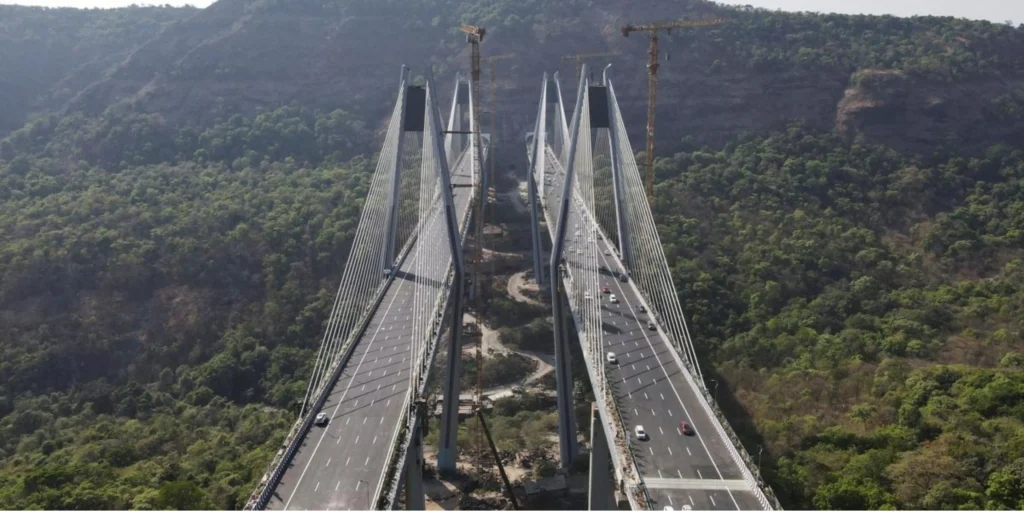
- The project also includes India’s tallest cable-stayed bridge, rising approximately 183 meters above Tiger Valley.
- A 650-meter-long cable-stayed bridge has been constructed over Tiger Valley, showcasing advanced bridge design and structural engineering capabilities.
How Was the Mumbai–Pune Expressway Missing Link Project Engineered?
The Mumbai–Pune Expressway Missing Link Project demonstrates how India is adopting advanced digital engineering technologies to execute highly complex infrastructure projects with greater precision, efficiency, and safety. Instead of depending only on conventional CAD workflows, the project extensively utilized modern BIM (Building Information Modeling) methodologies, intelligent monitoring systems, and digital project management platforms.
Advanced BIM Implementation
A comprehensive 5D BIM (Building Information Modeling) approach was used extensively for the tunnel and bridge construction phases of the project. This digital methodology is combined:
- 3D design visualization for accurate engineering models
- 4D simulation for construction scheduling and sequencing
- 5D integration for cost estimation and budget management
The BIM workflow helped engineers coordinate tunnel structures, bridge systems, utilities, ventilation layouts, and construction activities within a unified digital environment.
Common Data Environment (CDE) and ERP Integration
To manage the large volume of engineering and construction data, the project adopted a Common Data Environment (CDE) integrated with Enterprise Resource Planning (ERP) systems. This digital ecosystem enabled real-time collaboration between engineers, consultants, contractors, and project managers.
The integration improved:
- Document control and project coordination
- Construction monitoring and reporting
- Resource allocation and workflow management
- Cost tracking and scheduling efficiency
Clash Detection and Coordination
BIM technologies played an important role in identifying design conflicts before actual construction began. Engineers used digital coordination tools to perform clash detection between structural, mechanical, electrical, and tunnel systems.
This reduced construction delays, minimized rework, and improved execution accuracy across the project’s complex infrastructure components.
SCADA and Intelligent Tunnel Monitoring
The tunnels are equipped with advanced SCADA (Supervisory Control and Data Acquisition) systems for real-time operational monitoring and safety management.
These intelligent systems support:
- Traffic monitoring and incident management
- Automated tunnel ventilation control
- Fire and smoke detection systems
- Environmental condition monitoring
- Emergency response coordination
Artificial Intelligence (AI)-enabled monitoring systems also help optimize traffic movement and enhance tunnel safety operations.
Intelligent Ventilation and Fire Safety Systems
The tunnel infrastructure includes advanced automated safety technologies such as:
- Jet fan ventilation systems for maintaining air quality
- Real-time monitoring of carbon monoxide (CO) and nitrogen dioxide (NO₂) levels
- High-pressure water mist systems for rapid fire suppression
- Linear heat detection systems capable of instantly detecting abnormal temperature increases inside tunnels
These technologies significantly improve operational safety for passengers and emergency response teams.
Advanced Construction Engineering
The project also utilized sophisticated construction techniques and automated engineering systems during execution. Precast concrete barriers, automated climbing formwork systems, and high-precision structural engineering methods were used for constructing the massive bridge pylons and elevated structures.
The cable-stayed bridge over Tiger Valley required highly specialized engineering coordination due to its height, structural complexity, and challenging terrain conditions.
Digital Transformation in Indian Infrastructure
The Mumbai–Pune Expressway Missing Link Project reflects the growing role of digital engineering in India’s infrastructure sector. Technologies such as BIM, CAD, GIS, SCADA, IoT, and intelligent traffic management systems are helping deliver safer, faster, and more sustainable infrastructure projects.
This digital-first approach not only improves project execution but also strengthens long-term infrastructure maintenance, operational efficiency, and asset management across India’s rapidly expanding transportation network.
Note: The information shared in this blog post has been gathered and compiled from publicly available internet sources, industry articles, and news reports. While we have made every effort to ensure the accuracy of the content, some technical details, project specifications, or timelines may change over time. Readers are advised to refer to official project authorities and government sources for the latest and most accurate information.
About ProtoTech Solutions
ProtoTech Solutions is a leading technology company specializing in BIM, CAD, 3D visualization, engineering software development, and digital transformation solutions for the architecture, engineering, and construction (AEC) industry. With extensive expertise in Building Information Modeling (BIM), CAD design & drafting, CAD interoperability, cloud-based engineering platforms, and infrastructure technology, ProtoTech helps organizations streamline project workflows, improve design collaboration, and accelerate digital innovation.
We deliver advanced solutions for infrastructure, construction, manufacturing, and smart engineering projects by integrating modern technologies such as BIM automation, 3D web visualization, GIS integration, digital twins, and AI-powered engineering applications. ProtoTech has worked with global clients to enhance project planning, clash detection, asset management, and intelligent infrastructure development.
By supporting modern infrastructure initiatives and digital engineering practices, ProtoTech Solutions continues to contribute toward the advancement of smart construction technologies and the future of digitally connected infrastructure projects worldwide.