
Key Factors to Consider in Conveyor System Design
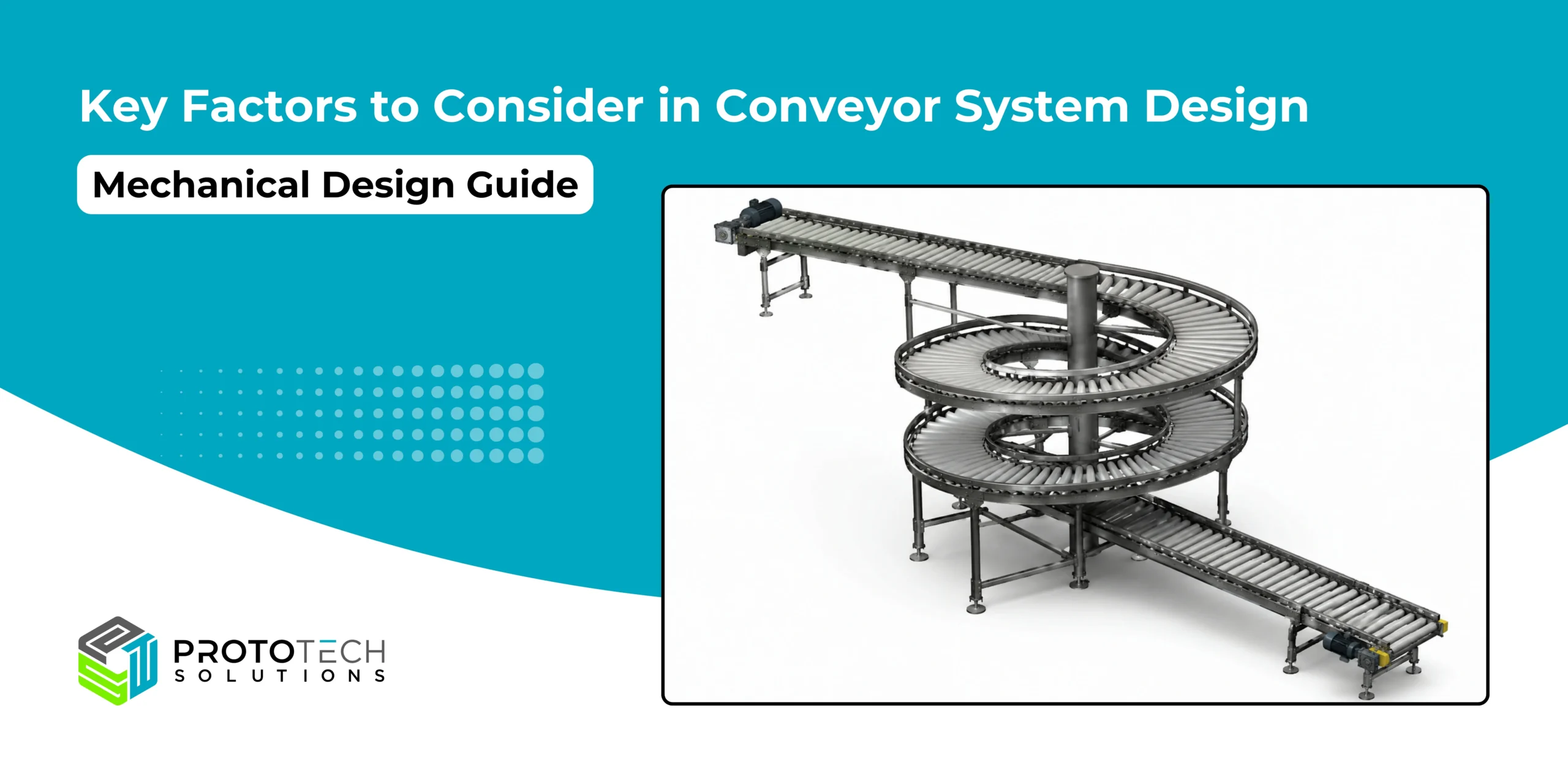
Conveyor systems play a critical role in modern industrial operations by enabling efficient material handling, streamlined production flow, and reduced manual intervention. From automotive manufacturing and packaging industries to food processing and heavy engineering plants, conveyors are essential for improving productivity, safety, and operational efficiency.
However, designing an efficient conveyor system requires more than selecting belts and motors. A well-engineered conveyor system must be optimized for load capacity, material type, operating environment, layout constraints, and long-term maintenance requirements. Proper conveyor system design not only improves workflow efficiency but also reduces downtime, operational costs, and equipment failure risks.
This article highlights the key factors that engineers and manufacturers should consider when designing conveyor systems for industrial applications.
1. Understanding Material Characteristics
The first and most important step in conveyor system design is understanding the material being transported. Material characteristics directly influence conveyor type selection, belt material, drive system, and structural design.
Important factors include:
- Material weight and bulk density
- Size and shape of the product
- Abrasive or corrosive properties
- Moisture content and temperature
- Fragility and handling sensitivity
For example, heavy industrial components may require chain or roller conveyors, while lightweight packaging products are better suited for belt conveyors. Similarly, abrasive materials require wear-resistant belts and reinforced structures to ensure durability and longer service life.
2. Selecting the Right Conveyor Type
Choosing the correct conveyor type is essential for achieving smooth material flow and operational efficiency. Different industrial applications require different conveyor configurations.
Common conveyor types include:
- Belt Conveyors
- Roller Conveyors
- Chain Conveyors
- Modular Conveyors
- Slat Conveyors
- Screw Conveyors
Belt conveyors are widely used for continuous material handling, while roller conveyors are preferred for pallet and box transportation. Chain conveyors are ideal for heavy-duty industrial applications requiring higher load capacity and durability.
The selection process should be based on:
- Product type
- Production rate
- Load capacity
- Operating conditions
- Space availability
An optimized conveyor selection improves productivity while minimizing maintenance and operational costs.
3. Load Capacity and Throughput Requirements
Accurate load calculations are critical in conveyor system engineering. Underestimating load capacity can lead to equipment failure, excessive wear, and operational downtime.
Engineers must evaluate:
- Maximum product weight
- Conveyor speed
- Material flow rate
- Starting and stopping loads
- Dynamic and impact loading conditions
Proper load analysis helps determine motor power, gearbox capacity, belt strength, shaft dimensions, and structural support requirements. A conveyor designed with accurate throughput calculations ensures smooth operation even under peak production conditions.
4. Conveyor Layout and Space Optimization
Efficient conveyor layouts are essential for maximizing floor space utilization and improving production workflow. Conveyor routing should minimize unnecessary material movement while ensuring easy access for operators and maintenance teams.
Key layout considerations include:
- Plant floor dimensions
- Machine integration points
- Elevation changes
- Loading and unloading stations
- Maintenance accessibility
- Future expansion possibilities
Well-planned layouts reduce bottlenecks, improve material flow efficiency, and support safer industrial operations.
5. Drive System and Motor Selection
The conveyor drive system directly affects system performance, energy efficiency, and reliability. Selecting the correct motor and drive components ensures smooth acceleration, controlled movement, and reduced energy consumption.
Important factors include:
- Required torque and speed
- Conveyor length and incline
- Load variations
- Duty cycle requirements
- Energy efficiency targets
Variable Frequency Drives (VFDs) are commonly used in modern conveyor systems to provide speed control, soft starting, and energy savings. Proper motor sizing prevents overheating, excessive power consumption, and premature equipment failure.
6. Structural Design and Material Selection
Conveyor structures must be strong enough to withstand operational loads, vibrations, and environmental conditions. Structural design plays a major role in conveyor stability, safety, and service life.
Common structural materials include:
- Mild steel
- Stainless steel
- Aluminum profiles
- Galvanized steel
Material selection depends on the operating environment. For example:
- Stainless steel is preferred for the food and pharmaceutical industries due to its corrosion resistance.
- Heavy-duty welded steel structures are commonly used in mining and heavy engineering applications.
Proper structural analysis ensures adequate strength while optimizing overall system weight and manufacturing cost.
7. Safety and Industry Compliance
Safety is a critical aspect of conveyor system design. Industrial conveyors must comply with relevant safety standards and regulations to protect operators and equipment.
Essential safety features include:
- Emergency stop systems
- Safety guards and covers
- Pull cord switches
- Overload protection
- Sensor-based monitoring systems
- Anti-slip and anti-jam mechanisms
A properly designed conveyor system reduces workplace accidents and improves overall operational reliability.
8. Maintenance and Serviceability
Conveyor systems should be designed for easy inspection, maintenance, and component replacement. Poor maintenance accessibility can increase downtime and repair costs.
Design considerations for maintenance include:
- Easy belt replacement
- Accessible drive components
- Modular assembly design
- Lubrication accessibility
- Standardized spare parts
Preventive maintenance planning helps extend conveyor life, reduce unexpected breakdowns, and improve operational efficiency.
9. Automation and Smart Integration
Modern industries increasingly require automated conveyor systems integrated with sensors, PLCs, robotics, and Industry 4.0 technologies. Smart conveyor systems improve process control, production tracking, and operational efficiency.
Automation features may include:
- Sensor-based product detection
- Automated sorting systems
- Barcode and RFID integration
- PLC-controlled conveyor sequencing
- Real-time monitoring systems
Automated conveyors improve productivity while reducing labor dependency and operational errors.
Conclusion
Conveyor system design is a critical engineering process that directly impacts industrial productivity, operational efficiency, and manufacturing reliability. A well-designed conveyor system requires careful consideration of material characteristics, load capacity, conveyor type, structural integrity, safety standards, and automation requirements.
By implementing proper engineering analysis and optimized design practices, manufacturers can improve material handling performance, reduce downtime, and achieve long-term operational efficiency. Whether designing conveyor systems for automotive plants, warehouses, packaging lines, or heavy industrial applications, professional engineering design ensures reliable and cost-effective solutions tailored to specific production needs.
About ProtoTech Solutions
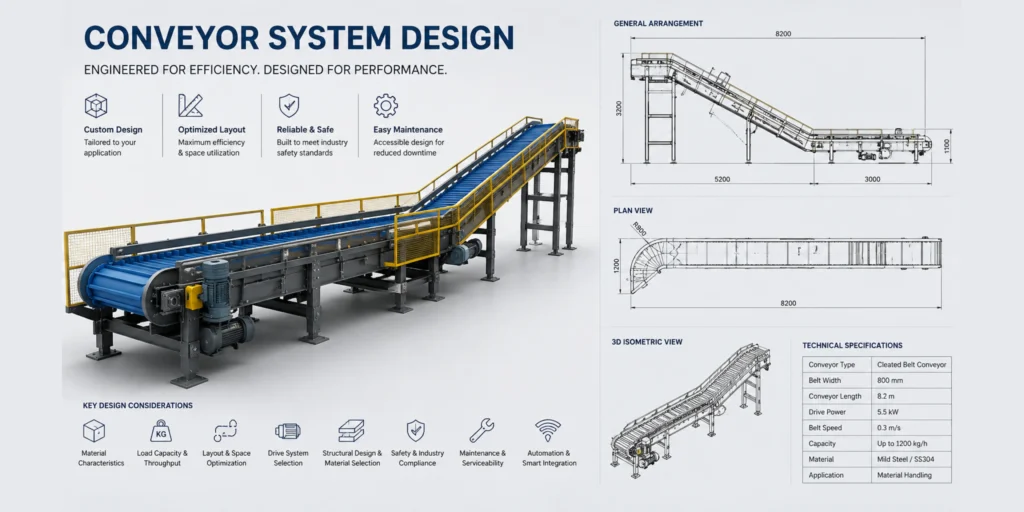
At ProtoTech Solutions, we deliver advanced mechanical design and drafting solutions tailored to modern industrial requirements. With extensive expertise in conveyor systems, material handling equipment, and special-purpose machine (SPM) design, our engineering team develops efficient, reliable, and production-ready solutions for a wide range of industries.
We specialize in designing and developing custom conveyor systems, including belt conveyors, roller conveyors, chain conveyors, and modular conveyor solutions based on project-specific operational requirements. Our engineering approach focuses on performance optimization, manufacturability, structural reliability, and cost-effective execution.
Our capabilities include:
- 3D assembly modeling and detailed part modeling
- Accurate fabrication and manufacturing drawings
- GA drawings, layout drawings, and BOM preparation
- 2D-to-3D CAD conversion for improved design visualization
- Conveyor and material handling system optimization
- Custom machine and SPM design solutions
Using industry-leading CAD platforms such as SolidWorks, AutoCAD, PTC Creo, and Inventor, ProtoTech Solutions helps manufacturers streamline product development, improve operational efficiency, and accelerate manufacturing processes with technically accurate engineering support. Contact us for more information.