How to Build a High-Converting 3D Product Configurator for E-commerce in 2026
In 2026, e-commerce demands immersive experiences to capture buyer attention amid fierce competition. Imagine your customer customizing a product online, spinning it, changing colors, adjusting specs, and visualizing the final version before checkout. Now imagine that experience boosting your sales, lowering return rates, and creating customer loyalty as you’ve never seen before.
In 2026, consumers expect immersive, interactive shopping experiences, not static photos and basic dropdowns. A high-converting 3D product configurator is no longer a luxury; it’s a must-have growth engine for e-commerce brands that want to outperform competitors on platforms like Amazon, Flipkart, and direct-to-consumer stores.
Let’s break down what this tool is, why you need it, the top features your configurator must include, and how real brands are winning with it today.
What is a 3D Configurator?
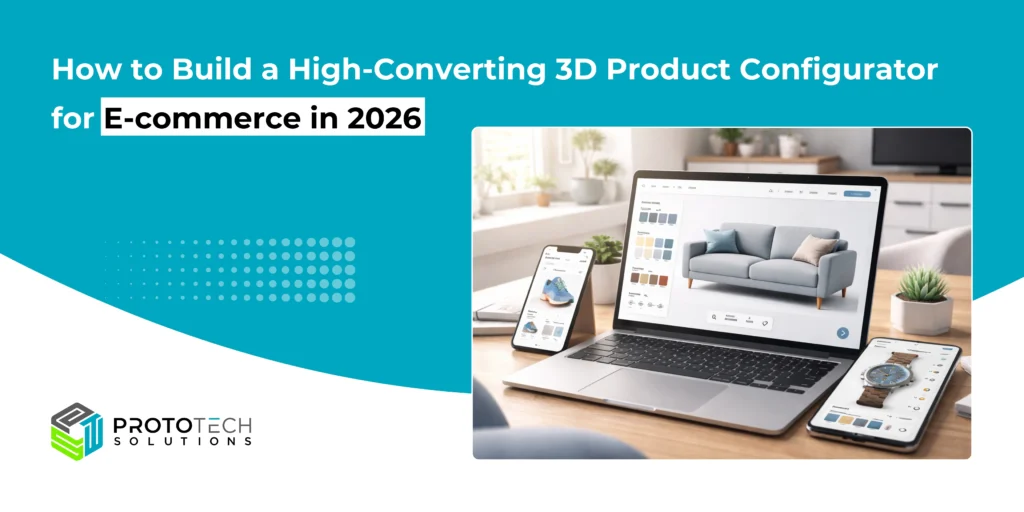
A 3D product configurator is an interactive online tool that lets shoppers visualize, rotate, zoom, and customize products using realistic 3D models. Customers tweak colors, materials, sizes, and features instantly, seeing photorealistic previews before checkout, bridging the gap between online browsing and in-store trials.
This technology leverages WebGL frameworks like Three.js for smooth rendering on any device, turning static images into dynamic shopping journeys. For e-commerce brands, it’s not just visualization; it’s a conversion engine that builds buyer confidence. This visual confidence drives engagement, reduces hesitation, and ultimately increases conversion rates.
E-Commerce Platform Market Growth
According to the Markets and Markets research company, the e-commerce platform market is projected to grow from USD 9.08 billion in 2025 to USD 16.51 billion by 2030 at a CAGR of 12.7% from 2025 to 2030. The major vendors covered in the eCommerce platform market are Shopify (Canada), eBay (US), Etsy (US), Square (US), BigCommerce (US), Amazon (US), Adobe (US), Wix (Israel), Oracle (US), and Squarespace (US).
Global e-commerce revenue hits $6.88 trillion in 2026, surging 7.2% from 2025, accounting for 21.1% of total retail sales. In India, Flipkart dominates with 48% market share and over 180 million active users, while Amazon India follows at 31-35% with 150 million users.
These giants see massive traffic: Flipkart logged 606 million visits in the first 48 hours of Big Billion Days 2025 alone. Such scale means brands must stand out; 3D configurators cut through the noise on high-traffic sites like these, driving engagement where billions shop daily.
Benefits of a 3D Configurator for E-commerce Brands
3D configurators boost conversion rates by letting customers experiment freely, reducing guesswork and building trust in custom orders. They slash returns up to 30% by providing accurate previews, saving costs on shipping and restocking. Investing in a 3D product configurator is not just a tech upgrade; it’s a strategic business decision. Here’s why:
- Boosts Engagement & Time on Page: Interactive visuals keep customers engaged longer, and more time exploring means a higher likelihood to convert.
- Reduces Returns: Customers who see exactly what they’re ordering are less likely to return products due to mismatched expectations.
- Increases Average Order Value: Configurators upsell features, add-ons, and premium options organically during the customization process.
- Builds Customer Confidence: Seeing a product rendered in real time builds trust, especially for personalized or high-investment items.
- Differentiates Your Brand: Brands with configurators stand out against competitors using static images or limited customization.
- Personalized Experience: Customers feel part of the design process, allowing them to create bespoke products that meet their exact needs, which boosts satisfaction.
Top 3D Configurator Features for E-commerce in 2026
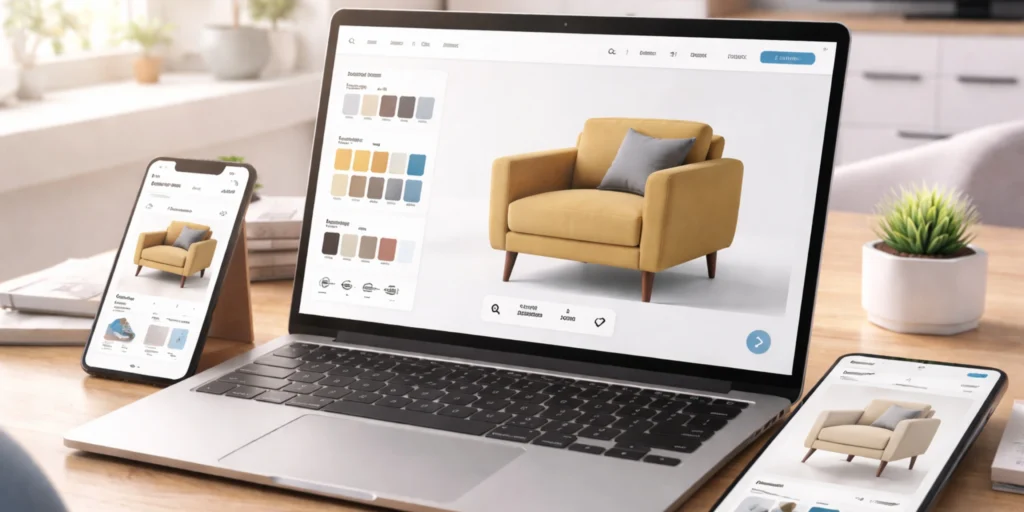
As customer expectations evolve, these five features aren’t just nice-to-haves; they are essential for conversion-focused ecommerce stores.
1. Real-Time Customization
Enable instant changes to colors, textures, sizes, and accessories with lag-free updates, essential for keeping users hooked. Rules-based logic prevents invalid combos, ensuring manufacturable designs while calculating live pricing.
2. Photorealistic 3D Rendering and 360° Views
High-fidelity models with zoom, rotation, and animations deliver showroom-quality visuals without heavy load times. Optimized assets via Blender or Maya support fluid performance across desktops and mobiles.
3. Dynamic Pricing & Real-time CPQ
Instant updates to the total price as features are added or changed, providing transparency and facilitating immediate, accurate, and automated “Configure, Price, Quote” (CPQ) functionality.
4. AR/VR Integration
Let buyers place customized products in their space via AR, skyrocketing purchase confidence for furniture or apparel. In 2026, VR previews via headsets add immersion, perfect for complex items like boats or eyewear.
5. Seamless E-Commerce Integration
Sync with Shopify, WooCommerce, or Magento for real-time inventory, cart adds, and ERP/CRM data flow. Mobile-responsive design ensures touch-friendly use, capturing 60%+ of traffic from phones.
6. Mobile-First
Designed for seamless performance across all devices, particularly mobile phones, with intuitive controls for scaling, rotating, and zooming without requiring specialized hardware or software.
7. Built-In Analytics and Sharing
Track user preferences by demographics to refine offerings, plus social sharing and wishlisting to amplify reach. Dynamic pricing and material libraries auto-update costs, streamlining sales from config to close.
Conclusion
As e-commerce continues to evolve in 2026, brands that rely solely on static product images and basic configuration options will struggle to meet rising customer expectations. Today’s online shoppers demand clarity, control, and confidence before making a purchase decision, and a high-converting 3D product configurator delivers all three. It transforms the buying journey from passive browsing into an immersive, interactive experience where customers actively engage with the product, explore variations, and visualize outcomes in real time.
In an increasingly competitive e-commerce landscape dominated by global marketplaces and fast-growing direct-to-consumer brands, differentiation is key. A high-performance 3D product configurator enables brands to stand out, deliver consistent omnichannel experiences, and future-proof their digital storefronts.
By investing in the right technology and implementation partner, e-commerce brands can turn product visualization into a powerful conversion engine that drives sustainable growth well beyond 2026.
Looking for a High-Performing 3D Configurator for Your E-commerce Store? If you’re ready to transform browsing into buying and deliver unforgettable product experiences, ProtoTech Solutions can help. With expertise in advanced 3D configurator development and e-commerce integrations, we build solutions that drive engagement, increase conversions, and maximize revenue.
Get in touch to design a powerful 3D configurator tailored for your brand’s success in 2026 and beyond.