Top 10 Best Product Configurator Features for 2026
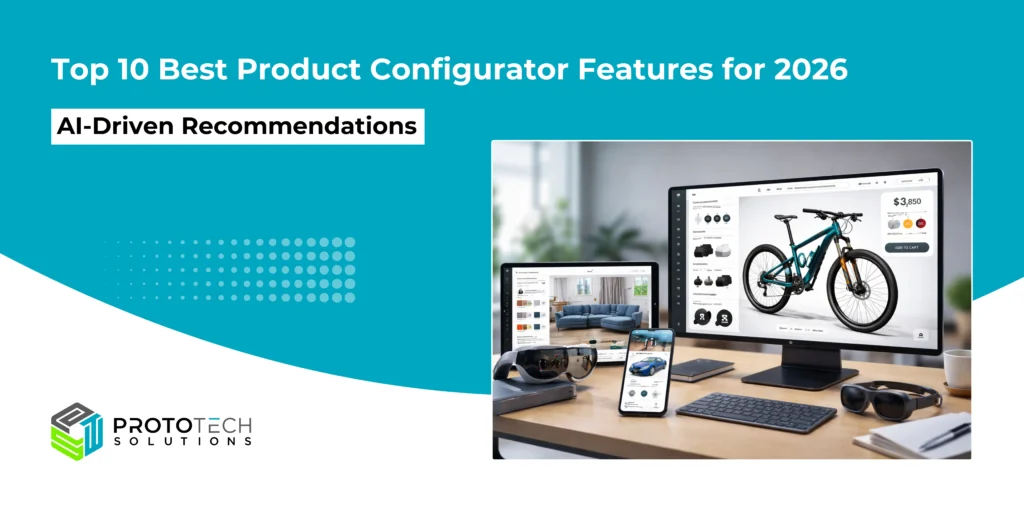
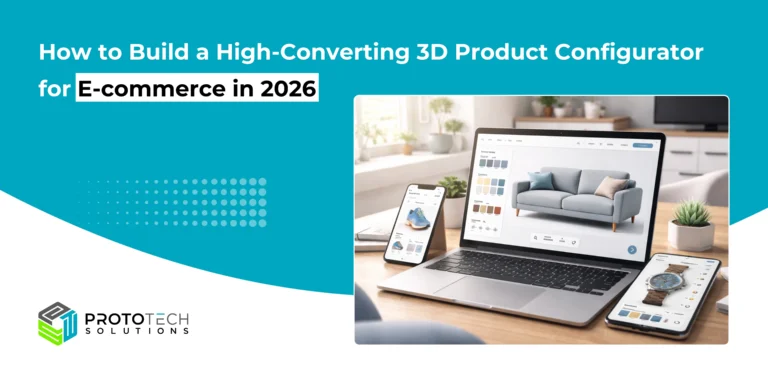
In the fast-evolving world of e-commerce and manufacturing, a product configurator stands out as a digital tool that lets customers build custom products by selecting options like materials, sizes, and features. Think of it as an interactive builder for everything from furniture to machinery. By 2026, these tools will become critical for business growth as customer demand for personalization surges, projected to drive 80% of sales in customizable categories, per recent industry forecasts.
Why now? Rising competition and shorter attention spans mean static product pages no longer cut it. Advanced product configurator features boost engagement, cut returns by up to 30%, and shorten sales cycles. For business owners and product managers eyeing 2026, investing in a robust 3D product configurator or eCommerce configurator isn’t optional; it’s a revenue accelerator.
Top 10 Product Configurator Features Shaping 2026
Here are the top 10 best product configurator features that will dominate in 2026, each backed by real-world applications and proven benefits.
1. Real-Time 3D Visualization
Real-time 3D product configurator rendering lets users rotate, zoom, and view products from every angle as they customize.
Business use case: Furniture, automotive, industrial equipment, and consumer goods brands allow customers to visually customize products before purchase.
Customer experience boost: Shoppers see exact outcomes, building confidence.
Impact: Conversions rise 25% (Forrester data), errors drop via accurate previews, and operational efficiency improves with fewer redesigns.
2. AI-Driven Intelligent Recommendations
AI analyzes user choices and past data to suggest complementary options, like recommending hardware for a custom cabinet.
Business use case: An eCommerce brand for laptops upsells RAM based on the selected processor.
Customer experience boost: Feels intuitive and helpful, reducing decision fatigue.
Impact: Increases average order value by 15-20%, streamlines sales teams’ upselling, and minimizes cart abandonment.
3. AR/VR Integration
Augmented and virtual reality overlays custom products in real environments via mobile or headset.
Business use case: Automotive parts supplier lets users “place” wheels on their car photo. Customers preview products in their real environment, like placing machinery on a factory floor or furniture in a living room.
Customer experience boost: Immersive trials make abstract customizations tangible.
Impact: Cuts returns by 40%, accelerates decisions, and enhances global scalability for remote sales teams.
4. Dynamic Pricing
Pricing updates instantly as configurations change, factoring in materials, quantities, and add-ons.
Business use case: Machinery builder quotes a conveyor system with real-time cost adjustments.
Customer experience boost: Transparent, no-surprise totals build trust.
Impact: Reduces pricing errors by 90%, boosts conversions through clarity, and optimizes margins for manufacturers.
5. Omnichannel Support
Seamless syncing across web, mobile, in-store kiosks, and apps ensures consistent experiences.
Business use case: An Apparel brand starts a jacket config online and finishes in-store.
Customer experience boost: Frictionless journeys wherever they shop.
Impact: Customers enjoy a consistent experience whether online, offline, or assisted by sales teams. Lifts cross-channel conversions by 35%, unifies sales data, and improves efficiency for omnichannel teams.
6. Seamless API & ERP/CRM Integration
Open APIs connect to CRM, ERP, inventory, and payment systems for end-to-end automation. Configurators connect with ERP, CRM, CAD, and manufacturing systems.
Business use case: Product customization software links to Shopify and SAP for instant stock checks.
Customer experience boost: Reliable availability prevents disappointments.
Impact: Speeds order fulfillment by 50%, cuts manual errors, and scales operations without silos.
7. Built-In Analytics & Configuration Insights
Built-in metrics track user behavior, drop-off points, and popular configs for data-driven tweaks.
Business use case: Sales teams analyze why users abandon bike customizations at frame color.
Customer experience boost: Indirectly improves via refined interfaces.
Impact: Data-driven decisions lead to better product offerings, pricing strategies, and marketing campaigns. Identifies conversion killers, reduces errors in product offerings, and drives 20% revenue growth through insights.
8. Cloud-Based Scalability
Handles traffic spikes and complex models without lag, scaling from startups to enterprises. Fast load times and reliable performance, even for complex 3D models.
Business use case: Seasonal toy maker manages Black Friday surges for doll configurators.
Customer experience boost: Fast loads keep impatient users engaged.
Impact: Supports global expansion, maintains 99.9% uptime, and lowers IT costs for growing brands.
9. Hyper-Personalization Engines
Uses customer data (with consent) for tailored starting points, like pre-loading past orders.
Business use case: Jewelry eCommerce greets repeat buyers with their preferred gem settings.
Customer experience boost: Feels bespoke and valued.
Impact: Conversion rates climb 28%, fostering loyalty and shortening sales cycles amid rising customization demands.
10. Rule-Based Validation
Smart rules prevent invalid combos, like incompatible parts, with on-the-fly guidance.
Business use case: Electronics firm blocks over-spec CPUs in budget chassis.
Customer experience boost: Guides to feasible options without frustration.
Impact: Slashes manufacturing errors by 60%, ensures efficient production, and builds trust through reliability.
Future Trends in Product Configurator Technology
The future of product configurators is being shaped by AI automation, generative design, and immersive technologies. By 2026, AI-powered systems will be capable of generating configurable 3D models directly from text or rule-based inputs, dramatically reducing design and engineering timelines for manufacturers.
Advanced automation will manage rule validation and clash detection in complex assemblies, a critical advantage for industries like AEC, industrial manufacturing, and modular product design. At the same time, AR and VR will evolve beyond visualization into fully immersive, interactive digital showrooms.
These shifts will transform sales cycles from weeks to hours, empowering faster customer decisions. As customization demand explodes (expected 2x growth per McKinsey), product configurator features like these enable global scalability, letting eCommerce brands serve diverse markets without inventory bloat.
Mastering these top 10 best product configurator features positions your business at the forefront of a personalization-driven economy. From higher conversion rates and fewer order errors to streamlined sales and manufacturing workflows, the ROI is undeniable.
Businesses that adopt advanced product customization software today will be better positioned to meet future buyer expectations, outpace competitors, and unlock new revenue opportunities in 2026 and beyond.
If you are ready to step confidently into 2026, now is the time to act. Connect with our product configurator experts to build a solution tailored to your business needs, and take your digital product experience to the next level.