
Why Site Drainage Design is Critical for Land Development (Avoid Costly Mistakes)
Introduction
A newly completed development looks perfect on the surface. Roads are paved, buildings are ready, and everything seems on track until the first heavy rain hits. Within hours, water starts pooling across the site. Parking areas flood, soil begins to erode, and cracks appear near foundations. What should have been a successful project suddenly turns into a costly problem.
This situation is not rare. It happens when site drainage design is treated as an afterthought instead of a priority. For developers and decision-makers, overlooking drainage can quickly turn a profitable investment into a long-term liability. Proper planning from the start is what separates resilient projects from those that fail under pressure.
What is Site Drainage Design?
Site drainage design is the process of planning how water moves across a property to prevent accumulation and damage. It ensures that rainwater and surface runoff are directed safely away from structures, roads, and critical areas.
It involves:
- Site grading and slope design
- Stormwater drainage design systems
- Soil and terrain analysis
- Water runoff management
A well-designed drainage plan for construction ensures that rainwater is safely directed away from buildings, roads, and critical infrastructure.
Common Mistakes in Site Grading & Drainage Design
In most projects, drainage failures are not due to complex engineering issues; they result from simple planning mistakes. Here are the most common ones seen on actual construction sites:
1. Incorrect Site Levels and Slopes
- Slopes are too flat, preventing water flow
- Water is directed toward buildings instead of away
- Low spots create water pooling
2. Ignoring Natural Water Flow
- Natural drainage paths are blocked
- Land is reshaped without considering the runoff direction
3. Undersized Drainage Systems
- Systems handle light rain but fail in heavy conditions
- Poorly sized pipes and channels lead to overflow
4. Lack of Coordination Between Design and Execution
- Site grading plans are not followed correctly
- On-site changes disrupt drainage flow
5. Ignoring Soil Conditions
- Clay soils retain water, causing pooling
- Loose soils increase erosion risks
Why Site Drainage Design Matters in Land Development
Prevents Flooding and Water Damage
Without effective stormwater drainage design, water can collect quickly during rainfall. This leads to flooding, surface water buildup, and potential damage to buildings and infrastructure.
Flooded sites not only delay construction but also create safety risks and increase repair costs.
Protects Structural Integrity
Water can weaken foundations and cause soil movement over time. Poor drainage often leads to cracks in structures, uneven surfaces, and long-term stability issues.
By managing water properly, you protect the strength and lifespan of your development.
Ensures Regulatory Compliance
Most regions have strict requirements for stormwater management and land development drainage. Failing to meet these standards can result in fines, legal complications, and project delays.
Proper drainage planning helps ensure your project meets all necessary regulations from the beginning.
Reduces Long-Term Costs
Investing in drainage design early helps avoid expensive repairs and maintenance later. Fixing drainage issues after construction is often far more costly than addressing them during the planning stage.
Key Elements of Effective Drainage Planning
Grading and Slope Design
Proper grading ensures that water flows away from buildings and key areas. Even small errors in slope can lead to significant drainage problems.
A carefully planned grading strategy forms the backbone of effective drainage design.
Stormwater Management Systems
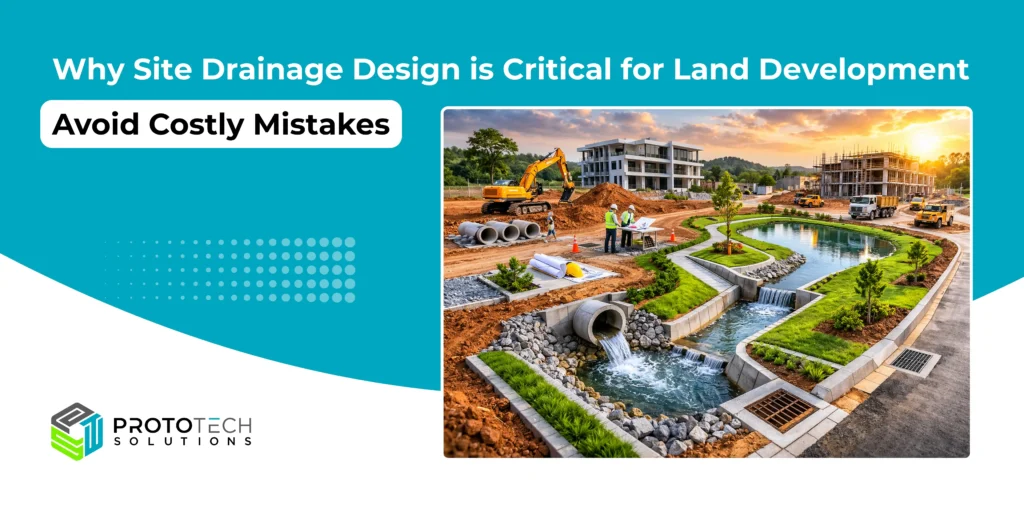
Stormwater management systems control how water is collected and redirected. These may include drains, channels, and retention ponds that efficiently handle excess water.
Such systems are essential for managing heavy rainfall and preventing site overflow.
Soil and Site Analysis
Different soil types react differently to water. Some absorb water quickly, while others retain it, increasing the risk of runoff and erosion.
Understanding site conditions allows for a drainage system tailored to the land’s specific characteristics.
How Land Design and Drafting Improve Drainage Planning
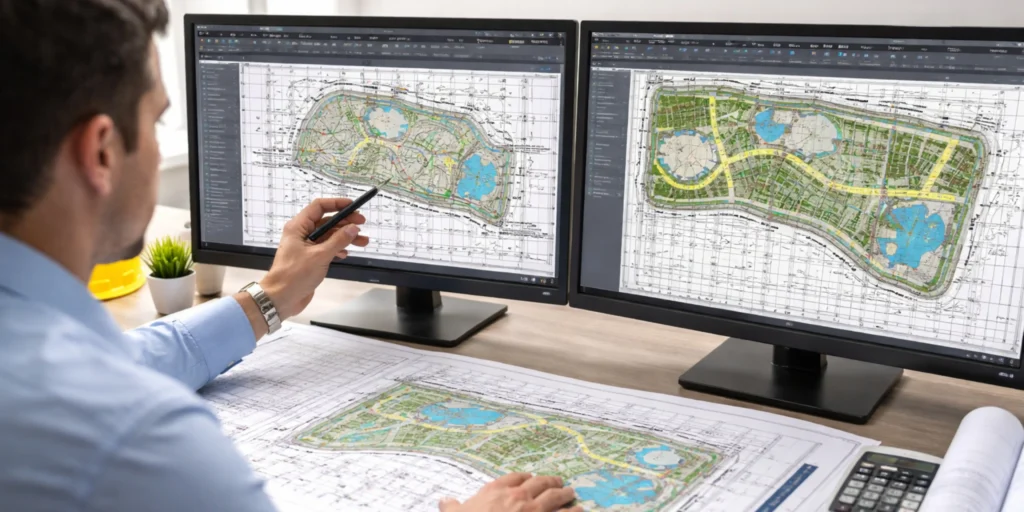
Most grading and drainage problems do not begin during construction. They start much earlier, during the planning stage. This is where professional land design and drafting play an important role in preventing common on-site issues and ensuring smooth project execution.
Accurate Site Understanding
Land design and drafting begin with a detailed analysis of the site. This includes studying ground levels, natural slopes, and existing water flow patterns. By understanding how water naturally behaves on the land, potential problem areas can be identified early. This approach helps prevent issues instead of dealing with them later during construction.
Proper Grading That Prevents Water Issues
A well-prepared grading plan ensures that the land is shaped correctly to guide water in the right direction. It eliminates low-lying areas where water tends to collect and ensures that runoff is directed away from buildings and critical zones. This reduces the risk of waterlogging, soil instability, and foundation damage.
Efficient Drainage Planning
Land design professionals create drainage systems tailored to the site’s actual conditions. This includes selecting the right size and placement of drains, channels, and outlets. A properly designed system can handle both normal and heavy rainfall, ensuring consistent performance and reducing the chances of overflow or flooding.
Faster Approvals and Smooth Execution
Clear and accurate drafting helps in meeting regulatory requirements and simplifies the approval process. Detailed drawings also guide contractors during construction, reducing confusion and errors on-site. This leads to smoother execution and helps keep the project on schedule.
Lower Costs and Higher Project Value
Investing in proper land design and drafting reduces the likelihood of rework, delays, and unexpected expenses. It also minimizes long-term maintenance issues. As a result, the project’s overall quality and reliability improve, increasing its value and appeal to buyers and investors.
Final Thought
For developers and decision makers, the message is simple. Plan early, invest wisely, and prioritize drainage from the beginning. Consulting experienced professionals and integrating effective drainage planning into your project can make the difference between long-term success and avoidable setbacks.
Land design and drafting are not just about creating drawings. It is a critical step that ensures grading and drainage systems work effectively. When planned correctly, it prevents common site problems, supports smooth construction, and helps deliver a project that performs well over time.
Plan your project the right way from the start — Contact us